


Thanks for subscribing to infoRED. Whether you’re here for the financial logic behind football’s biggest moves, the governance shifts shaping the game, or the layered visuals that bring it all to life—this platform exists because fans like you demand more than surface-level coverage. If you’re a free subscriber you’ll get a weekly free newsletter, but for the full experience consider a paid subscription at £4.99 a month - the cost of a pint or a warm seasonal Starbucks beverage.
With infoRED, it isn’t about transfer gossip or recycled narratives. It’s about clarity, context, and commercial truth. We dig into the numbers, the boardroom decisions, and the regulatory frameworks that define modern football—especially when it comes to Liverpool FC and the wider Premier League ecosystem.
This week, we’re breaking down Liverpool’s Champions League campaign—not just on the pitch, but in the balance sheet. With Arne Slot’s side under pressure and European fixtures offering both redemption and revenue, we’re mapping out exactly what’s at stake. Let’s get into it.
Liverpool return to European action on Wednesday night against Eintracht Frankfurt, needing more than just a result. Four straight defeats across all competitions—including a 2-1 loss to Manchester United at Anfield—have exposed tactical vulnerabilities and raised questions about squad cohesion. The midweek Champions League fixture isn’t just about points. It’s about stabilising a season that’s veering off course, and protecting access to the financial upside that comes with elite European competition.
Reds boss Arne Slot, whose stock couldn’t have been higher coming into this season following a Premier League title in his debut season at the helm, faces an early inflection point. The club’s summer outlay was significant. Alexander Isak, Florian Wirtz, Hugo Ekitike, Jeremie Frimpong, and Milos Kerkez arrived to reshape the squad. But the early returns haven’t matched the investment as yet, and that has led to plenty of dissection as to the reasons why, with the talking heads of sports radio making sure the froth is there for people to call in, and the odd hit piece on players who have played four Premier League games thrown in for good measure. The Champions League, however, offers both a reset and a revenue stream that can justify the strategy and quell the disquiet—if Liverpool deliver.
Champions League: The Financial Centrepiece
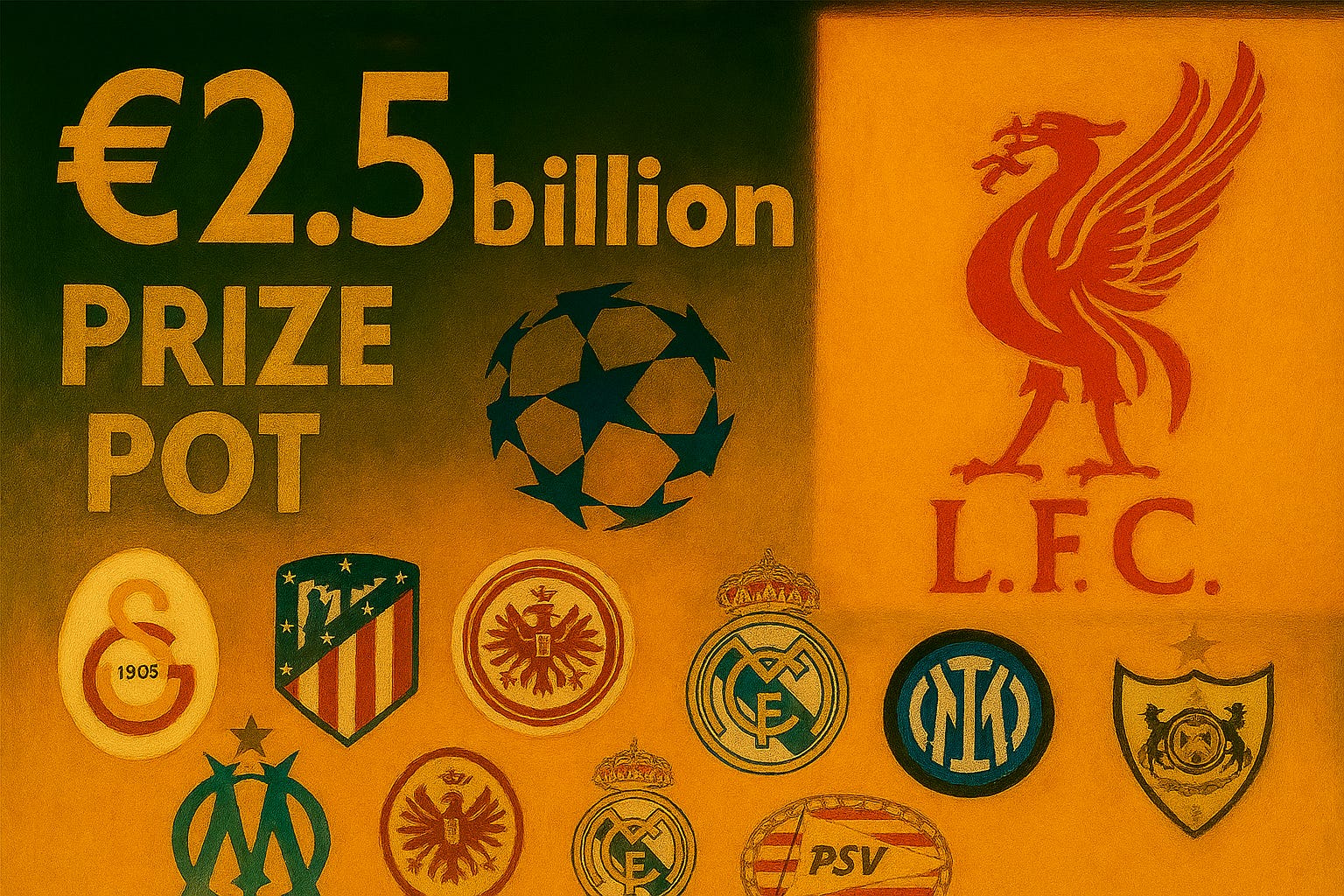
UEFA’s new revenue model for 2025/26 puts the Champions League at the heart of European football’s economy. Of the £3.03bn split across three competitions, £2.16bn (74%) is allocated to the Champions League. The Europa League receives £489m (17%), and the Conference League £247m (9%).
Liverpool’s guaranteed earnings before kick-off in the league phase stand at £53.1m. That includes:
£16.1m participation fee
£36.8m from the value pillar (based on UEFA coefficient and market strength)
Minimum prize money
Only Manchester City (£55.7m) earn more among English clubs. Chelsea (£50m), Arsenal (£48.3m), Tottenham (£44.1m), and Newcastle (£30.4m) follow. The gap between Champions League and Europa League entrants is stark: Aston Villa and Nottingham Forest start with £15.3m and £13.4m respectively, while Crystal Palace begin their Conference League campaign with £8m.
This guaranteed income is foundational. It allows clubs to budget with confidence, plan for future investment, and absorb short-term volatility. For Liverpool, it’s a buffer against domestic inconsistency—and a baseline that can be significantly improved with competitive success.
But what else is in play?
